
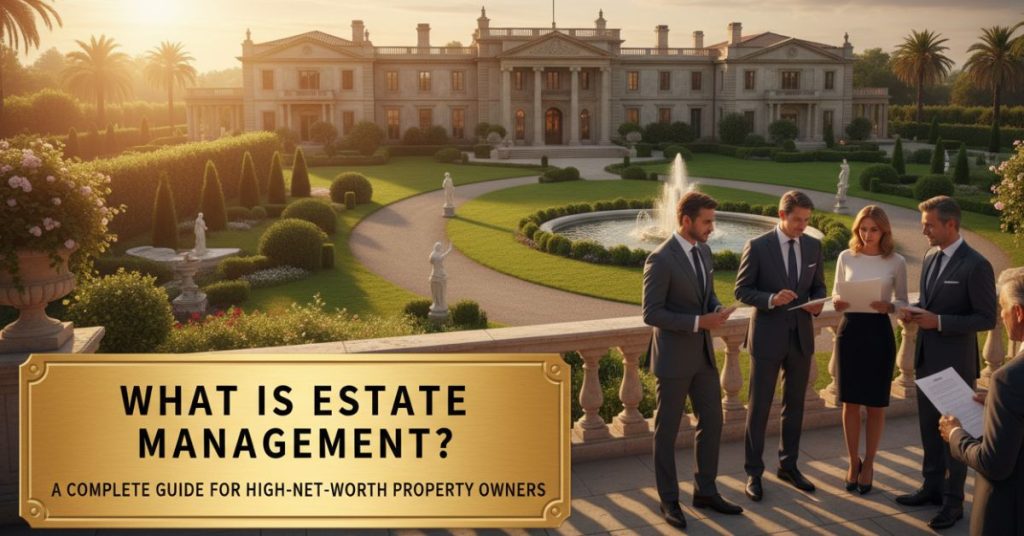
Owning a large private residence offers comfort, privacy, and prestige. However, maintaining such properties requires consistent planning, staff coordination, and regular upkeep. Large homes, landscaped grounds, and multiple service providers make property operations far more complex than standard homeownership.
This is where estate management becomes essential. High-net-worth property owners often rely on structured systems or professional oversight to keep everything running smoothly.
Understanding what estate management is helps property owners protect their investment, maintain luxury living standards, and reduce the time spent handling operational responsibilities.
What is Estate Management?

Estate management refers to the organized oversight of large private properties. It includes property maintenance, staff coordination, budgeting, security planning, and operational supervision.
Unlike traditional real estate management, which often focuses on rental or commercial properties, estate oversight supports privately owned residences designed for personal use.
Large estates typically include multiple structures, outdoor amenities, and full-time staff. Proper estate management ensures that these elements operate efficiently and remain well-maintained throughout the year.
Types of Estates That Require Management
Different types of properties benefit from structured supervision, especially when they include large spaces, multiple facilities, or extensive land. Organized oversight helps keep these estates well maintained and running efficiently.
Luxury Residential Estates
Luxury residential estates often include spacious homes, beautifully maintained outdoor areas, guest accommodations, and private lifestyle features. Looking after properties of this size requires thoughtful planning, regular maintenance, and coordination with different service teams. With proper supervision, the entire property remains well organized, comfortable, and prepared for everyday living as well as hosting guests.
Historic or Heritage Estates
Historic and heritage estates require special attention to protect their unique character. These properties may contain classic architectural details, period interiors, and design elements with cultural significance. Careful oversight helps maintain these features through routine inspections, expert restoration work, and preservation efforts that respect the estate’s original style and history.
Private Family Estates and Large Landholdings
Private family estates with large land areas, waterfront access, or recreational facilities also require ongoing attention. These properties may include gardens, outdoor activity spaces, and multiple buildings spread across the land. Well-structured estate management helps coordinate landscaping, seasonal upkeep, and routine inspections so the entire property remains in excellent condition.
Services Offered in Estate Management
Professional managers handle the daily responsibilities that keep large private properties running efficiently. Their role often includes coordinating service providers, scheduling maintenance work, and managing the administrative tasks that support the household.
Many homeowners also partner with companies that specialize in estate management services. These firms provide organized support such as maintenance planning, expense tracking, and overall property supervision.
As part of their estate manager duties, professionals may also oversee smart home systems, manage vendor agreements, and supervise household staff. Their goal is to keep every part of the property operating smoothly. Many owners also depend on them for luxury home management, ensuring high-end homes and their amenities remain properly maintained.
Why Estate Management Matters for High-Net-Worth Owners?
Owning valuable property is only one part of maintaining it. Without organized systems, even well-designed estates can face operational challenges. Estate management helps ensure that maintenance schedules, security systems, and household operations run efficiently. It also protects long-term property value through preventive care.
Another benefit is lifestyle support. Large estates often host guests, events, or extended family visits. Proper organization allows these activities to take place without disrupting the household. Structured oversight also reduces the workload for property owners who travel frequently or maintain multiple residences.
Key Estate Manager Duties

Managing a large estate requires a wide range of responsibilities. The professionals responsible for estate manager duties coordinate daily operations and maintain property standards.
-
Property Maintenance
Maintenance planning is one of the most important estate manager duties. Regular inspections, landscaping schedules, and repair coordination help keep the property in excellent condition.
Preventive maintenance also protects high-value features such as pools, outdoor structures, and mechanical systems.
-
Staff Supervision
Many estates rely on a team that may include housekeepers, chefs, security staff, gardeners, and maintenance workers. Overseeing this team is an important part of estate manager duties. Managing schedules, guiding staff, and monitoring performance helps ensure that daily services run smoothly across the property.
-
Financial Coordination
Financial management is an important part of running a large estate. Expenses often include property maintenance, staff wages, utility bills, and payments to different service providers. Keeping organized financial records helps homeowners monitor spending and clearly understand how funds are used across the property.
-
Security and Risk Management
Security measures help keep both the property and its residents safe. Many estates rely on gated entry systems, security cameras, and emergency response procedures as part of their daily operations. Clear privacy rules also ensure that staff, guests, and visitors respect the homeowner’s personal space and follow proper access guidelines.
Property Management vs Estate Management
Understanding property management vs estate management helps explain how these two roles differ. Property management usually deals with rental or investment properties. The responsibilities often include handling tenant communication, managing lease agreements, and collecting rent.
Estate oversight works differently because it focuses on privately owned residences rather than rental units. Instead of dealing with tenants, the priority is maintaining the home and supporting the owner’s lifestyle. Another important difference in property management vs estate management is the level of personalization. Estate operations are adjusted to fit the homeowner’s schedule, preferences, and daily household needs.
Modern Trends in Luxury Home Management
Technology has changed the way large estates are handled today. Smart home systems allow owners and managers to adjust lighting, control indoor temperature, check security cameras, and manage entry systems from almost anywhere. These features make luxury home management more practical because important home functions can be monitored and controlled even when the owner is away.
Digital tools also make it easier to stay on top of property tasks. Many estates now rely on centralized platforms to track expenses, line up maintenance work, and keep record of vendors and service providers. This organized approach helps cut back on everyday issues and gives homeowners a clearer view of how their estate is running. With these tools in place, modern luxury home management has become simpler, more organized, and easier to manage.
Flexible Estate Management Models
Not every property needs someone to look after it full time. Some homeowners prefer flexible arrangements depending on how often they stay at the estate. Vacation homes, seasonal properties, or second residences may not require daily supervision, but they still need regular inspections, upkeep, and coordination with service teams to keep everything running smoothly.
In these situations, owners may consider options such as fractional estate management. This model offers professional support on a part-time basis while maintaining high property standards. It works well for estates used only during certain times of the year, ensuring the property remains maintained, secure, and ready whenever the owner arrives.
Conclusion
So, what does all this mean for property owners? Managing a large estate involves much more than simply owning it. From maintenance and staff coordination to security and daily operations, many responsibilities must be handled consistently to keep everything running smoothly.
That is why many high-net-worth homeowners turn to professional estate management. With the right structure and support in place, the property stays organized, well-maintained, and ready to enjoy at any time. Instead of dealing with constant management tasks, owners can focus on their lifestyle while knowing their estate is in capable hands.